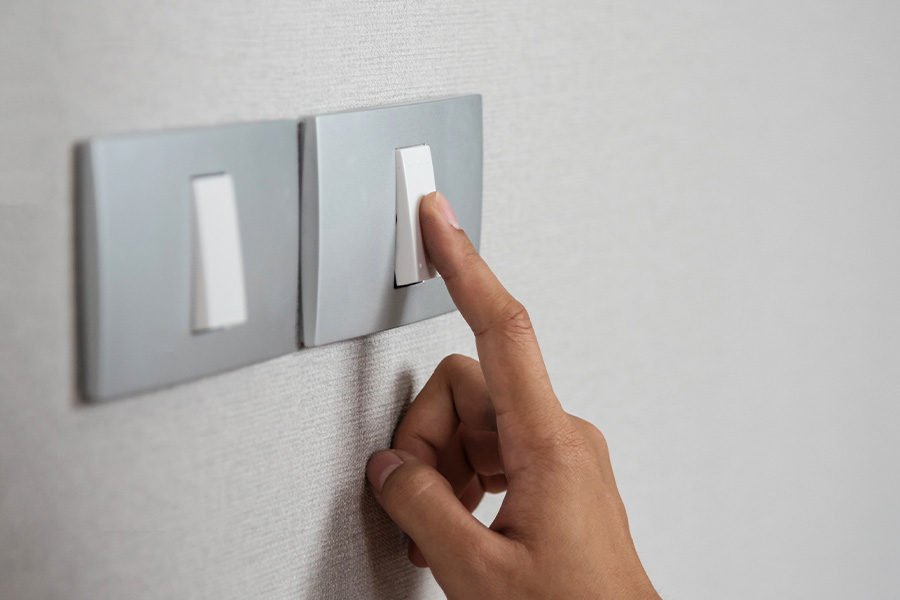
A light switch is one of those things in your house that you expect to work. When you flick the switch and nothing happens, your first thought is probably that the bulb burned out. But if the bulb has already been replaced and the switch still is not responding, there is likely a deeper issue at play, and it is worth understanding what that could mean for your home’s electrical system.
In this blog, we will walk you through what typically causes a light switch to fail, what signs indicate a bad switch, and when to call electricians in Wylie, TX, to schedule professional repair or replacement.
What Causes Light Switches To Stop Working?
A light switch that has stopped responding is rarely a random failure. In our service calls throughout Wylie, TX, we see a consistent set of causes behind failing switches, including:
- Heavy use in high-traffic areas of the home
- Internal arcing caused by frequent switching over time
- Dust or moisture accumulation inside the switch housing
- Brittle plastic components in older switches
- Loose internal connections resulting from age or repeated pressure
- Poor original installation or an overloaded circuit
- Decades of general wear in older homes
- Damage from power surges or short circuits
- Excess heat, unusual noise, or inconsistent performance
These are among the most common causes we encounter while working in homes across Wylie, TX, but a light switch is rarely the only issue. It is connected to the broader wiring and circuit system in your home, which means an underlying issue elsewhere can sometimes manifest as a faulty switch. If your light switch is not working, no matter what you have already tried, it is time to bring in a professional for a proper diagnosis.
How To Figure Out If a Light Switch Is Bad in Wylie, TX
A malfunctioning light fixture is not always as simple as a burned-out bulb. Understanding what a professional evaluation involves can help you recognize when it is time to call for service rather than continue troubleshooting on your own.
Confirming the Power Is the Issue
The first step in any electrical diagnosis is safely isolating the circuit. This means shutting off the power at the breaker and confirming, using proper testing equipment, that no current is present before any inspection of the switch or wiring begins. This is a step our technicians treat as non-negotiable on every service call, since working around live wiring carries real risk without the right training and tools.
Recognizing Physical Warning Signs
Once the switch has been safely accessed, a technician will closely inspect the switch and the surrounding wall plate for scorch marks, melted plastic, or discoloration, all of which indicate overheating or internal arcing. Sound is also a telling indicator. A switch that produces buzzing, crackling, or popping noises when flipped often fails to maintain a solid electrical connection, and flickering lights in the affected fixture frequently accompany this.
Ruling Out the Fixture Itself
Before assuming the switch is at fault, it is worth confirming the issue is not simply the fixture or bulb. If a fresh bulb does not resolve the problem, or if the fixture still fails to power on when tested through a different circuit, the switch itself becomes the primary suspect.
Inspecting the Switch Internally
A technician will carefully remove the switch from its electrical box to check for frayed wiring, burn marks, or loose terminal screws. Loose connections are a common culprit, since they create resistance that generates heat over time and eventually leads to failure. A toggle or rocker that feels worn, unstable, or sticks when moved is another clear sign that replacement is the right call.
Confirming Failure With Proper Testing Equipment
The final step in a professional diagnosis involves testing the switch directly using calibrated equipment to confirm whether it is passing current correctly. This kind of testing requires an understanding of single-pole versus three-way switch configurations and how to interpret the results accurately, which is why this step is best left to a licensed technician rather than attempted with a basic home tool.

Contact Blue Line Electric for Professional Light Switch Repair in Wylie, TX
You do not have to take risks with electrical work, especially when you are unsure what is actually causing the problem. Blue Line Electric provides expert troubleshooting and repair for switches and outlets, along with broader lighting repair services for fixtures throughout your home. When the issue extends beyond a single switch, our team can also evaluate the overall health of your home’s electrical system to ensure nothing else is contributing to the problem.
Switching Things Around for the Better
A light switch that will not cooperate is rarely just about that one switch. It is often a signal worth listening to about the condition of your home’s wiring and electrical system as a whole. Blue Line Electric brings licensed expertise and honest, upfront pricing to every switch, outlet, and lighting concern we handle in Wylie, TX. If you have already confirmed an issue using this guide or want a professional opinion, contact our team today to get it resolved right.